Head of Buddha
Photography by Synthescape, Digital image © Asia Society
Photography by Synthescape, Digital image © Asia Society

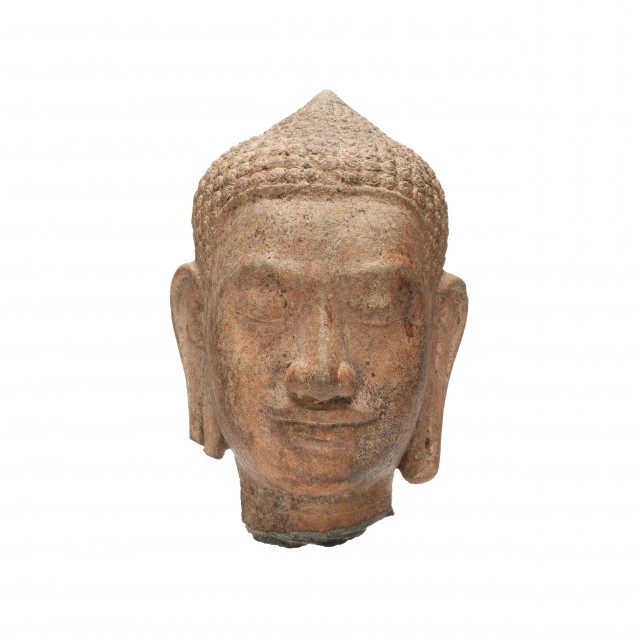
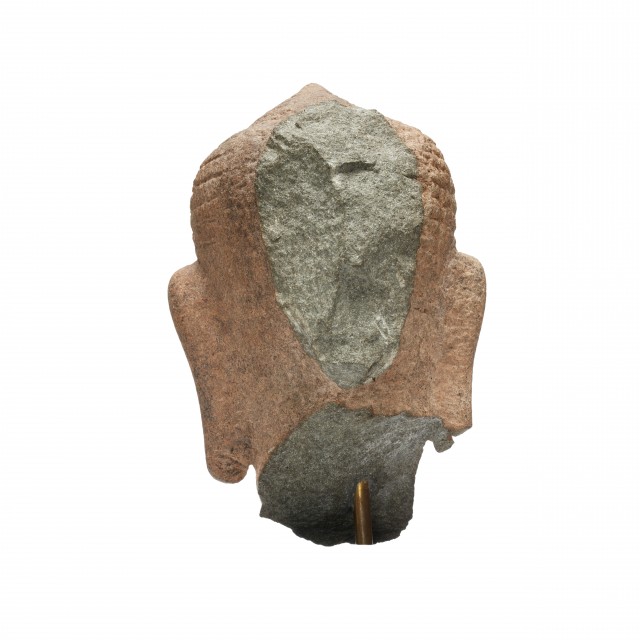
Head of Buddha
Cambodia; Angkor period (9th–15th century), Bayon style, 12th-13th century
Sandstone
H. 13 x W. 8 1/2 x D. 9 1/2 in. (H. 33 cm)
Asia Society, New York: Mr. and Mrs. John D. Rockefeller 3rd Collection, 1979.71
Provenance
John D. Rockefeller 3rd, New York, NY; acquired from Robert Rousset, Paris in 1968.
The Asia Society, New York, NY, bequest of John D. Rockefeller 3rd, New York, NY, 1979.
Licensing inquiries
This Buddha head embodies a spiritual focus and serenity typical of sculpture created during the reign of Jayavarman VII (reigned 1181 - ca. 1218), the powerful Khmer king who erected the Bayon temple. Although textual instructions, originally from India, delineated how Buddhas should be depicted, this head was created in accordance with the standard of Cambodian beauty of this time period and it exhibits distinctive features such as a slight smile and a raised, molded browbone. The head also displays standard characteristics that indicate the Buddha's perfected and supernormal nature. These include a bump atop the head, pointed in this case, signifying his expanded wisdom (ushnisha) and downcast eyes symbolizing his understanding and mastery of meditation. His elongated earlobes refer to his early life as a prince, when he wore heavy earrings; these holes remind the faithful that they, too, should reject worldly goods and pleasures.